Week 12: Concepts of Flexible Learning: Cultural sensitivity & indigenous learners
1 comments at Monday, May 30, 2011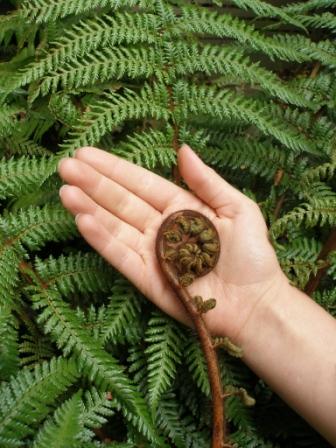 |
| Hand and koru by Heather Day |
Web conference: 2 June 15:00 – 16:30.
Indigenous people are ethnic groups who live in a geographic area with which they have the earliest known historical connection. Historically, many Indigenous groups, including Māori in Aotearoa New Zealand, have been the subject of colonial expansion. This has often resulted in territorial and cultural conflict, and the intentional or unintentional displacement and devastation of Indigenous populations (Wikipedia, 2010). In the contemporary context, Indigenous people often feature strongly in the lower echelons of society in terms of employment, socio-economic status, health status and educational attainment. As a result, it is important to consider the needs of Indigenous learners in the development, design and delivery of flexible learning programmes and courses.
Activity
Post responses to the following on your blog - after you have accessed the readings and media material.
- How can you include examples of New Zealand's indigenous culture in the design of your eLearning courses - language, society, history, political issues etc.?
- What approaches can you utilise to meet the needs of indigenous learners?
- Outline any experiences you have had working with indigenous learners.
- What were some of the challenges that you and the learners faced?
- How did this affect their learning?
Knowing your learner - Engaging Māori learners: an introductory resource for adult literacy and numeracy educators. Take note of the video about the model of learning for Maori - Te Whare Tapa Whā.
Reading
- Greenwood, J., & Lynne-Hairata, T.A. (2009). Hei tauira: summary document. Wellington, New Zealand: Ako Aotearoa. PDF
- Neal, T. & Collier, H. (2006). Weaving kaupapa Māori and e-learning. Journal of Maori and Pacific development, 7 (2): 68-73. (This reading will be posted on the Moodle forum.)
- Clayton, J.F., Rata-Skudder, N., & Baral, H.P. (2004). Pasifika communities online: and implications. Paper presented at the Third Pan-Commonwealth Forum on Open Learning. PDF
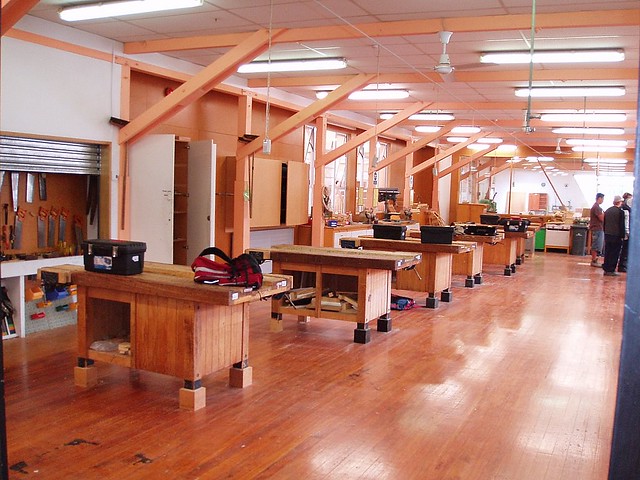 |
Otago Polytechnic Block L - Carpentry by leighblackall |
The tertiary education sector is highly competitive, and now that funding is shrinking even further organisations are scrabbling for a slice of the pie. Is Flexible Learning the answer? What strategies are working well and give organisations the edge? In this topic we will explore and justify some approaches to providing flexible learning environments in tertiary organisations. The Horizon report is worth a look each year to see what technologies are being predicted in the educational sector. 2011 Horizon report.
Activity Ten
- How do your ideas and strategies for flexible learning fit with your organisation?
- Post a response to your blog once you have explored your organisation's policies and strategies.
- Locate your educational organisation's strategic plan, charter or profile (or equivalent). It is usually a public document with mission statements, aims and objectives, and performance indicators.
- For example, the 2008 - 2012 Strategy for Otago Polytechnic.
- The Otago Polytechnic Charter. Other Otago Polytechnic strategic documents.
- Highlight statements that refer to or relate to flexible learning.
- Explore blogs of Otago Polytechnic staff who publish notes on their efforts.
- Fisher, K.(2010). Technology-enabled active learning environments: an appraisal. CELE Exchange 2010/7. OECD.
- Listen to or read the article: Annand, D. (2007). Re-organizing Universities for the Information Age. The International Review of Research in Open and Distance Learning, Vol 8, (3), 1-9.
- Getting Results in Literacy and Numeracy report. Tertiary Education Commission, New Zealand. An update of what has been achieved to date and next steps for the tertiary education sector.
- Read the article - The edgeless university
 |
| Easter bunny by somewhereintheworldtoday |
I hope you all had a relaxing Easter. We are exploring the meaning of open education this week, a very important subject for Otago Polytechnic and many educational organisations around the world.
I am very pleased to announce that Leigh Blackall is our speaker this week for the web conference. Leigh used to teach this course at Otago Polytechnic, and now works in Sport Studies and the Faculty of Health at the University of Canberra. He will be talking about the principles and practices of Open Education. This is a great opportunity to hear about this subject direct from someone who has worked in this area for a long time, and is really passionate about the practice of open education. You can read all about his activities on his blog.
Date and time: Thursday 5 May: 15:00-16:30.
Venue: the usual web conference link for the course. Remember to have a microphone and speakers (or headset) so you can join in the conversation.
Leigh is the author of this wonderful resource: Open Education Practices: A User Guide for Organisations
Activities this week include exploring the resource and attending the web conference. As well as:
Discuss on your blog:
- a definition of open education practices;
- some strategies you could use; and
- why you believe open education resources and philosophies are important for teaching and learning.
This is a copy of this week's topic from the wiki.
Your Flexible Learning plan has been steadily developing as your post your responses to the activities to your blog. During this week you can use the template to check that you have included information about all the topics covered so far in the course.
Case Study
Look at Helen's plan for flexible learning. The video of the plan is very interesting and outlines lots of strategies.
Activity Six – Continue developing the Flexible Learning plan on your blog using the 
- Discuss your ideas for the plan with peers.
- Record their feedback - a written summary, audio etc., and post this to your blog.
- Reflect on the strengths of your plan so far.
- Where are the gaps in your plan?
- Set some goals for what you still need to do to develop your plan.
Week 6: Recordings from class sessions for Strategies for Flexible Learning
0 comments at Monday, April 11, 2011 |
| Strategies for Blended Learning by bronwynannh |
You were asked to use a Blended Learning template to design some strategies in four categories as listed. Note: strategies for the Activities and Communication categories should include strategies for Interaction - student-student, student-teacher, student-content.
- Content.
- Activities.
- Communication - synchronous and asynchronous.
- Assessment.
Barbara Ker spoke to the f2f class about video assessments for Veterinary Nursing programmes. You can listen to a recording of her presentation - coming soon. The School of Veterinary Nursing has produced a very valuable set of guidelines for video assessments. One thing which intrigued me was the ethical clause instructing students to only engage in scheduled procedures and medication regimes. I believe this is to forewarn against unethical practices, and I had visions desperate students pulling cats and dogs off the street so they could complete their assessments on time. The school has to think of everything which might get in the way of a strategy ending in successful outcomes.
In the web conference, Jennifer Hamlin described how online learning is designed for distance students, and the recording included a demo of how Moodle is being used. The programmes are based on unit standards. There is a mix of block courses, practical work in block courses and in Veterinary clinics, online self-paced learning (on Moodle in exe packages), a synchronous online discussion forums, and regular web conferences (real time). Students video the skills they need to demonstrate for assessment, and some are during procedures in vet clinics and others are in the field (e.g., Rural Animal Technology).
Riding the wave over the last five weeks - what are you posting?
0 comments at Sunday, April 03, 2011 |
| By pareeerica |
Hot tip: Do try and find the time to encourage the others in class, and leave a comment on their blog posts now and then. There is no motivator better than the possibility of fame, and fortune.
Who will be the first person to add a link to an actual audio interview to the blog? Liz has excelled in her most recent post by preparing a brilliant reflection about a classroom experience - using the Three Step Reflective Framework. I encourage you to use this framework when posting. It will help make all my years of study and research worthwhile if you find a use for it.
Brief summary of everyone's blog posts and activity - in alphabetical order (I hope)
Christine describes how she approaches flexible teaching, and is feeling a little shy. So some encouragement and leading by example may be needed folks. The physical distances separating students from the main campus is a consideration for flexibility in Christine's classes, and this has guided the choice of strategies. This is a very interesting example. Check out the Acquisition and Participation models mentioned by Christine and discussed in the comments - you may like to see where your teaching fits with these models.
Fred's interview with Hannah got me very interested in the strategies she uses in her courses. I really like the mix of resources, and methods she uses for learning and providing evidence of learning. Field trips are so much fun, and sometimes get overshadowed by concerns about having enough time to cram in content. It does not appear that Hannah's courses are guilty of this, and I get a sense of a hive of bees working happily on their projects, making honey.
Personal example about field trips
I used to really enjoy taking nursing and midwifery students to the Anatomy museum where I ran a session on embryology. The students enjoyed getting out of the usual classroom, and working with the museum models, and peering in jars. The 3D models we worked with brought the subject alive, and I made use of the displays to get them thinking about the various embryonic stages of development. Video could have done the same thing but being able to touch and look, and work in groups made the whole experience memorable for myself and for the students.
Hannah has identified some key areas in her analysis of her learners. The diversity is broad indeed, and this must provide for some interesting dynamics and interactions in the class. I am interested to see how her ideas unfold, particularly in the 'Instructional approach' area. I have made some suggestions about using peer activities and harnessing mobile phones for learning. in the comments. There is also a very interesting interview with Fred about his mechanical engineering students.
Imroz, Namarta and Randeep have traveled all the way from India to study with us, and have introduced themselves on their blogs. Imroz has described in his second post, the importance of using technologies in the classroom. Randeep has posted a good example of a concept map and provided an interesting description of the class session with the puzzle. Namarta has explained in her second post, how useful she finds mind maps. She has also provided a diagram of the five dimensions of flexibility.
Julie has written how she is out and about in the field a lot so needs a mobile way to interact with us all in this class. Read all about her teaching, and the suggestions I have made to help her be a more mobile learner. You may also want to try this out for yourselves.
You may like to check out Kev's ice cream challenge which he has posted as an example of how he has encountered flexible learning.
Liz has posted a description of an example of flexible learning in nursing. She has described the various components in a Clinical Skills course, and how they fit under the five dimensions of Flexible Learning. Check out my comments on this post for some further ideas for flexibility and innovation in recording role plays. There is a second example about bioscience which is quite a different approach - check out the strategy used to encourage students with their self-directed learning.
Suzanne describes how she is dealing with a number of challenges to study this course online, and to communicate online with her peers and students. She has prepared a really interesting post about her teaching situation and the joys of living in a rural area. I really like her photo and explanation about the weaving exercise.
Please leave a comment here to let me know how useful you find this post in helping you organise your energies in the course.
what does access and equity, diversity and inclusive teaching and learning mean?
0 comments at Wednesday, March 30, 2011If you are still pondering the meaning of access and equity, diversity and inclusivity the information in this post may help. Perhaps think of a response to these questions.
- How can we provide access and equal opportunity to education for all learners?
- What does diversity in learning actually mean and how can you be inclusive?
 |
| Giant Panda by Sebastian Bergmann |
However, along came Giant Panda who wanted to come to class and meet other Giant Pandas, chew some bamboo with friends and learn new things. Giant Panda did not know how to use a computer, nor did he have one at home. He already felt different compared to the humans around him, so found the whole computer thing made him feel even more odd. He regarded computers as a bit of a mystery, best left unsolved. The teacher (Primrose) did not know what to do with Giant Panda, who began to hang around the campus bamboo patch, by himself, more and more. Week by week he got further and further behind with his studies. The teacher decided something had to be done, and talked to one of the other teachers (Rodney) who seemed to have a lot of success with students who were "different".
Rodney suggested asking Giant Panda how he preferred to find out new stuff. Once Primrose realised that Giant Panda liked to talk to others, and study in a group, read, and liked watching DVDs she worked out a plan of action with him - printed materials, peer study groups, DVDs and material in books. So Giant Panda was able to learn by sitting around doing what he loved, talking, and reading, and when he got to know the other students they sat with him to show him the the online materials, and all the exciting things you can do on the Internet. Slowly but surely he began to get curious about online learning, and once he finished Primrose's course decided to give computers a try. He did have an ulterior motive though - finding a female Giant Panda.
The moral of the story: Try and embrace diversity, and find a way to be inclusive so that all your students get the chance to learn. If one method does not work for your students, look at other options - there will be a solution - and someone will be able to help you find one if you ask and share your challenges. There is no "one size fits all" solution, you have to be prepared to offer choice, but it needs to be realistic for you as the teacher, and for the students. Often there is a simple solution, it may just be waiting for you to discover it.
Weeks Four and Five: Access & Equity - Diversity & Inclusivity
0 comments at Tuesday, March 22, 2011 |
One of the reasons for introducing more flexibility into teaching and learning is so that all students, regardless of their diversity, have an equal chance to learn. Consider how to provide inclusive access to course materials, learning activities, class interactions, and assessments. Learning styles and preferences are just one aspect to consider. Cultural sensitivity is an understanding of the way in which cultural factors and practices shape and influence the way people behave and learn. Read more on the wiki.
- Explore the meaning of Universal Design and inclusiveness in learning.
- Universal Design for Learning: A framework for access and equity. This includes a range of learning environments.
- Describe an example of inclusive teaching.
- What are some issues for access and equity in your classes?
- Provide a definition for access & equity, diversity & inclusivity relevant to your professional context.
- Explain what your learners will need to access the learning environment you plan to create.
- Post responses to your blog.
Summary of the Workshops - oncampus and virtual - Examples of Flexible Learning
0 comments at Thursday, March 17, 2011 |
Recap of Flexible Learning by bronwynann |
- Use the seven-stage continuum of flexibility.This is on page 11 of the reading by Casey & Wilson (2005).
- Use the flexibility grid?
 |
| Sarah Stewart, Educational Developer and Midwifery Educator |
This week we are exploring different types of Flexible Learning ( Examples of Flexible Learning ). In the Wednesday workshop we will be looking at a range of approaches used at Otago Polytechnic. I will prepare a summary of this session later on in the week. You are welcome to attend both the face to face and the online session, or access the recording of the web conference if unable to attend in person.This week's activity is a chance for you to talk to others about their work. Be sure and check out the readings as well for this week's topic: Examples of Flexible Learning
Activity Three – Investigate and describe an example of Flexible Learning in your organisation:
- Make a time to talk to two colleagues about how they incorporate flexibility in their teaching.
- Who are their students?
- How are the five dimensions of flexibility designed - time, delivery and logistics, entry requirements, content and instructional approaches and resources (Casey & Wilson, 2005)?
- You may wish to interview the teachers, and/or prepare a description to post to your blog. (Remember to ask permission to use any audio or other information on your blog.)
 |
| Brainstorm of flexible learning dimensions by bronwynannh |
You may be interested to read the range of ideas the class discussed in the first workshop. Click on the image to enlarge it. The image shows the outcomes of the brainstorm about the meaning of flexible learning. For example choice, structure and change were mentioned, along with anytime, anyhow, anywhere learning, resources and sustainability. The consensus from the group was that too much choice was not sustainable because organisational systems and infrastructure and Ministry of Education requirements often dictated procedures (e.g., deadlines for results).
People worked in pairs to discuss the five dimensions of flexibility – entry requirements, delivery and logistics, time, instructional approaches and resources, content.
1. What you are currently teaching and the main characteristics of your learners.
2. Explain to your partner how you currently teach in two of the dimensions.
3. Draw a mind map to illustrate the main points.
4. Are there any areas you would like to change to provide more flexibility? Why?
Watch the blogs to find out more about the discussions as the activity this week is focused on the five dimensions for flexibility. For example, Kevin mentioned his students are mainly male and in the younger age group where practical skills are key. However, theory is also taught and integrated with project-based learning and e-portfolios.
You should all have received a hard copy reading this week. Please let me know if it has not arrived.
Chapter one - Flexible learning: it’s not just about distance. By Collis, B. & Moonen, J. (2001). Flexible learning in a digital world. Open and Distance learning series. London: Kogan Page Ltd.
 |
| Blackberries by Szlagor |
Chocolate fish this week for Roger and Christine who have put links to their blogs on the Moodle discussion forum. I have now listed links to Roger and Christine's blogs here on the Course blog. There is also a link to the Course wiki on the blog. Please get your blog links up there this week. If you wish to use Moodle as the entry to the course - links to the Course wiki and Course blog are now available there, plus a link to Moodle chat if anyone wants to use that facility.
Subscribing to other participants' blogs
It saves time if you subscribe to each blog. Instructions on how to do this are in the Introduction section 1.1.3 Subscribing to other peoples' blogs.
This week's topic
Now is your chance to really explore flexible learning and find answers to the question on the topic - What is Flexible Learning? Last week in class we discussed Flexible Learning as anytime, anywhere, anyhow learning where student choice and structure were regarded as important. We also started looking at the five dimensions of flexible learning. Check out the readings on the wiki. This week you need to complete activity two. Contact me if you need help finding a buddy.
Activity Two: Find yourself a buddy in the class, and discuss the following questions:
- What does the term Flexible Learning mean to you?
- Why is it necessary to use a more flexible approach in your work?
- What do you need to explore to help this happen?
- What goals do you have for using Flexible Learning in your work?
- Post responses to your blog.
 |
| Figure 2. The five dimensions of flexibility (Source: Collis and Moonen, 2004) |
 |
| by Steve p2008 |
All the information for the course can be found on the Course Wiki - in the Flexible Learning Guidebook. This week, please familiarise yourself with the Homepage, the Course Outline, and the information in Introduction | Assessments.
A discussion forum on the Moodle course - GCTLT - Flexible Learning - will be used for you to aks questions about the topics, and we will send out a weekly reminder about reading this blog - where all announcements and reminders about the activities will be posted each week. Watch out for the first email alert from the forum to your inbox.
Classes
The first classes start this week. Classes will be held fortnightly, both face to face (Wednesdays) and online (Thursdays) as per the 2011 Timetable. In the first class we will be discussing the five dimensions of flexibility -
- On-campus: Wednesday 2 March at 10:00 - 12:00 in G303.
- Off-campus: Thursday 3 March at 15:00 - 17:00 via web conferencing.


