Showing posts with label diversity. Show all posts
Showing posts with label diversity. Show all posts
 |
| Abbotsford Community Services diversity mural by University of the Fraser Valley |
Why do we need to have a grasp on diversity to understand the
concepts of flexible learning?
Understanding who your students are, how they learn and what will encourage them to engage with your subject will optimise equitable access to the learning environment. Is it true to say that only by acknowledging difference can we be inclusive? Or is it fairer to say that good learning design is inclusive by default? What is diversity? What is culture? How is cultural diversity relevant to your teaching?
Where to start?
Check out the materials on WikiEducator about Diversity. Activity Four will guide you.
Read what others have said about diversity.
Hamish gives us a clue in his post - a really interesting example about the 'fish hooks' that can lurk within the diversity of language. Automotive engineering like any discipline clearly requires students to learn a new language. He is using some good strategies to support students to do this - using consistent terminology is an important part of the challenge.
Kevin has written a really good description about the diversity of his group of automotive students. He has presented an excellent critique about how his teaching approaches and the learning environment he creates link to principles of universal design.
Lorraine addresses some issues associated with diversity in nursing, a female dominated profession. So in this instance, gender disparity is high on the list. Why don't more blokes enter nursing do you think?
Nathan has highlighted the different areas of diversity in the Certificate in English and Engineering, a Functional English course, and discusses some really good ideas for supporting their diversity. Have you any suggestions for how he could engage the students who love to play on social networking sites?
 |
Cultural Capital of New Zealand by W J Harrison |
The next on-campus class is Friday 15 March 13:00-16:00 in D317, mostly looking at trends in education with some discussion about what people have explored in relation to cultural diversity.
Introduction
One of the reasons for introducing more flexibility into teaching and learning is so that all students, regardless of their diversity, have an equal chance to learn. Consider how to provide inclusive access to course materials, learning activities, class interactions, and assessments. Learning styles and preferences are just one aspect to consider. Cultural sensitivity is an understanding of the way in which cultural factors and practices shape and influence the way people behave and learn. There are several factors at play: ethnicity, religious beliefs, socio-economic status, location, professional role, belief systems and gender. People develop particular perspectives and values depending on the group or community in which they reside.
In some situations diversity also relates to disability - physical, psychological, and learning. All these factors can impact on access and equity when it comes to learning. Remember the strategies you introduce can become inflexible if issues of access and equity are not addressed. For example, using a lot of online resources when learners do not have ready access to computers and the Internet. Very importantly this topic requires an awareness of Universal Design and inclusive learning and teaching as well as cultural diversity.
Read more about the subject on the course wiki.
 |
| http://tiny.cc/b0rsbw |
Classroom activities this week
Web conference: http://adobeconnect.op.ac.nz/fl1
Wed 28 March: 13:00-14:00
Workshop: Thurs 29 March
Onsite: 13:00-15:00
Venue:
H606Activity Four –Define and describe the concepts of Access & Equity, Diversity & Inclusivity in your professional context. You have two weeks for this topic since it is Easter.
- Explore the meaning of Universal Design and inclusiveness in learning.
- Universal Design for Learning: A framework for access and equity. This includes a range of learning environments.
- Describe an example of inclusive teaching.
- What are some issues for access and equity in your classes?
- Provide a definition for access & equity, diversity & inclusivity relevant to your professional context.
- Explain what your learners will need to access the learning environment you plan to create.
- Post responses to your blog.
Easter break and mid term break - 9 April to 22
April (2 weeks) - Not 19 April as published on the initial schedule.
|
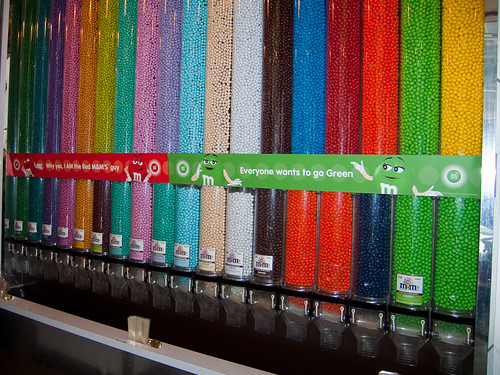
This week we are continuing the topic of access and equity but putting more emphasis on diversity and its association with cultural sensitivity. Be sure and check out the recordings of the class activities related to access and equity. See what the class came up with on their horse ride to the West Coast and the issues for online learning.
The following is taken from the course wiki regarding cultural diversity.
Cultural sensitivity and diversity in the context of flexible learning includes: ethnicity, religious beliefs, socio-economic status, location, professional role, belief systems, learning ability and gender. As you can see learning styles and preferences are just one aspect of diversity.
In some situations it also relates to disability regarding physical, psychological and learning attributes. All these factors can impact on access and equity when it comes to learning.
What's on the boil this week?
This week you are asked to consider two case studies, and think about how the factors associated with culture and diversity might impact on your students. There are some questions to think about around this topic. Check out the two readings - they are very relevant to this topic - one is about the cultural side of things and the other puts emphasis on diversity and learner preferences. If you don't feel like reading each one is accompanied by an mp3 audio version. This is put together by the editors of the online journal. There are also two presentations to view and information about learning styles and preferences.
Items to focus on during the break
First and foremost - make sure you have some R & R time.
- Course schedule - make sure you have looked at something under each of the topics to date. It is not necessary to explore everything - choose the things relevant to your Learning Plan.
- Challenge yourself with at least one thing in each topic which is out of your comfort zone.
- Learning Plan - submit this if it has not been done already or you feel it needs additional information. You may like to revisit your Learning Plan and add any new ideas you have had.
- Online discussion activities - contribute to the three activities and see how they contribute to Assessment two (due 10 May).
- Journal - keep this up to date -it would be lovely to see a brief summary of your activity on the email discussion at some stage after the holiday break.
Subscribe to:
Posts (Atom)


